Establishment of Design Index for AIV/FIV in depressurization systems
1.Abstract
In depressurization systems of process plants, the downstream piping may vibrate and be damaged by high noise generated when fluid is released from a high differential pressure valve. This phenomenon is called Acoustically Induced Vibration (AIV), and evaluation methods based on empirical equations have been adopted in the design of piping systems. However, the current evaluation methods have some limitations such as requiring excessive piping thickness for large flow rate and large diameter piping. In addition, even when the noise generated by the high differential pressure valve is small, severe vibration could occur at the downstream piping junction, and the current evaluation methods cannot properly evaluate such vibration. Actually, piping damage due to this phenomenon has been reported. In order to avoid over-design or under-evaluation of AIV, it is necessary to develop a new design evaluation method. Therefore, we clarified the physical phenomena by experiments and analyses, and devised a new design index. In addition, through the activities of the international Joint Industry Project* (JIP), a practical design method incorporating this index has been developed which will be adopted in the next edition of the most widely known guideline in this field globally (Energy Institute, Guidelines for The Avoidance of Vibration Induced Fatigue in Process Pipework, 2nd Edition (2008)). This guideline is also referred to in international design standards such as ASME B31.3, API521/579, and NORSOK L002, and is expected to become a de facto global standard.
*AIV Joint Industry Project sponsored by the Energy Institute
2.Detail of Technology
AIV is a complex phenomenon in which piping vibrates in the shell mode (circumferential direction) due to high frequency sound generated from shock waves at high differential pressure valves. On the other hand, at the junction of piping, the shell-mode vibration could be caused by FIV (Flow Induced Vibration) due to turbulent vortices (Fig. 1).
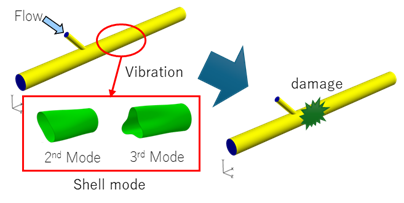
Figure 1 Shell-mode vibration
However, the current evaluation method does not consider the effect of shell-mode vibration caused by FIV. Therefore, the current model does not distinguish between vibrations caused by the sound source (AIV) and those caused by turbulent flow at the junction (FIV); instead, it includes all excitation forces in the evaluation of the sound source. In this study, we clarified experimentally and analytically the mechanism of shell-mode FIV under the condition that the small sound is generated at the source (Fig. 2). Then we clarified that when the sound generated by the sound source (AIV) is large, the vibration at the junction of pipes can be properly evaluated by adding both the effects of AIV and FIV (Fig. 3).
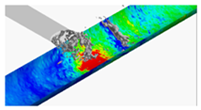
Figure 2 CFD simulation result at the pipe junction
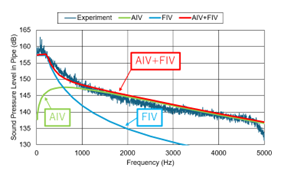
Figure 3 Sample of pressure fluctuations evaluated by AIV+FIV model (Izuchi, H. et Al., PVP2022-84921 (2022))
Through the activities of the JIP, based on this model, a practical index (LOF: Likelihood of Failure) which can easily evaluate piping vibration based on basic information without detailed analysis was established. By applying this method, it became possible to optimize wall thickness and extent of countermeasures for large diameter piping, and to design economically. In addition, it became possible to prevent failures caused by shell mode FIV which could not be evaluated by the existing method.
3.Summary
This technology will greatly contribute to the safe and reliable operation of energy plants in the world. We will continue to develop our technology and contribute to society by enhancing the safety of various facilities in both traditional areas and in new energy sectors, such as carbon neutral projects.
Itsuro Hayashi
Member,Chiyoda Corp.(Minato Mirai 4-6-2, Nishi-ku, Yokohama 220-8765)
Hisao Izuchi
Ex-Chiyoda Corp.(Minato Mirai 4-6-2, Nishi-ku, Yokohama 220-8765)
Masato Nishiguchi
Member,Chiyoda Corp.(Minato Mirai 4-6-2, Nishi-ku, Yokohama 220-8765)
Takahiro Ishigami
Member,Chiyoda Corp.(Minato Mirai 4-6-2, Nishi-ku, Yokohama 220-8765)