Development of an Unmanned Autonomous Combine Harvester
1.Overview
Japanese agriculture is facing challenges such as a diminishing agricultural workforce and an aging population, while the scale of farming operations for large-scale farmers is expanding. Against this backdrop, the demand for efficient agriculture with less workforce is rising, and the government is promoting the practical deployment of smart agriculture utilizing advanced technologies such as robots, AI, and ICT. Among the major agricultural machines, tractors and rice transplanters have achieved autonomous operation through remote monitoring from a visible location without the operator on board, and sales have commenced. However, in the case of combine harvesters, there were challenges such as ensuring safety, the difficulty of the tasks, and the continuity of operations. The unmanned autonomous combine harvester (Fig. 1) has overcome these challenges through advanced technology and control techniques, successfully achieving mass production for the first time in the industry.
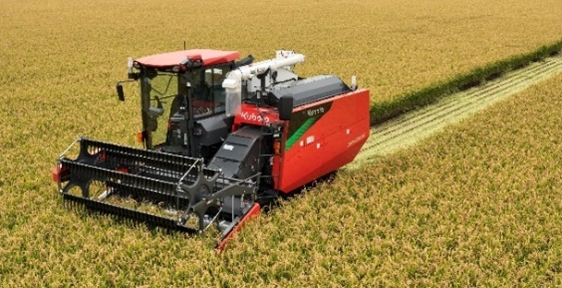
Figure 1 An unmanned autonomous combine harvester at work
2.Description of technology
(1) Sensor system for ambient monitoring adapted to harvesting work
The sensor system for monitoring the surrounding area must be able to detect obstacles such as humans and vehicles in a crop field, while remaining unresponsive to the crops being harvested, weeds, and birds entering the field. To achieve this requirement, front, rear, right, and left cameras mounted atop the body are used to detect humans by employing AI-based image recognition (Fig. 2). Millimeter wave radar is used to detect vehicles. Due to the stronger reflective properties of metal vehicles compared to crops or weeds, setting a high threshold for reflected waves allows for the detection of vehicles without reacting to crops or weeds.
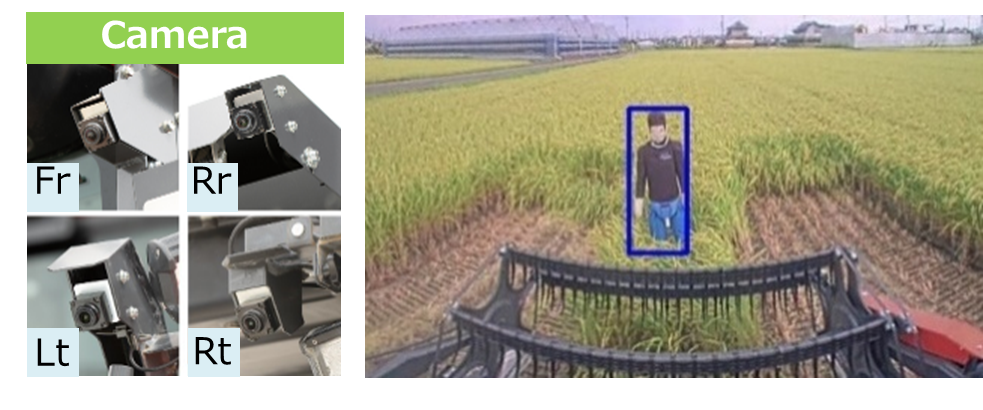
Figure 2 AI-driven image recognition
(2) Reaping route generation and reaping technique reaping technology from 2nd lap around periphery of field
When reaping the corners of a field along the ridges, it is necessary to follow a complex path without touching the ridges. For this reason, when manually reaping the outer periphery of the field, the height and position of the ridge are recognized using point cloud information obtained by the 2D-LiDAR at the front of the vehicle (Fig. 3). We developed an efficient turning strategy that remains below the height of the ridges when the ridges are high yet causes part of the vehicle to extend into the ridges when the ridges are low. We also established a function that repeats this reaping motion until the combine harvester can secure a turning area, based on the field outline map and crop area generated during manual reaping.
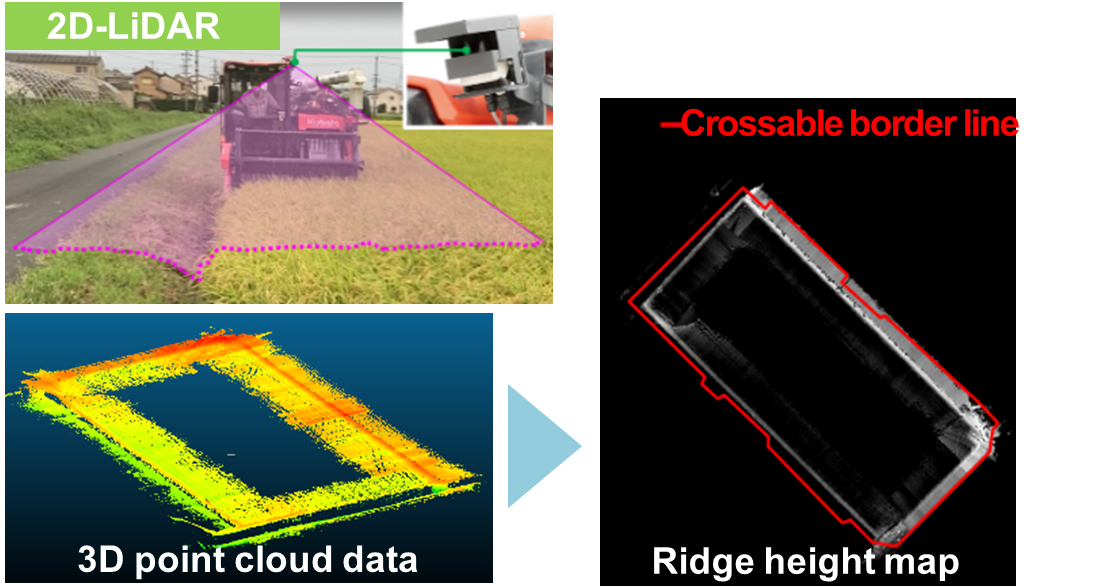
Figure 3 Recognizing height and position of ridges
(3) Automatic control according to crop height (rice and wheat)
Some of the crops in the field may be lodged, and may not be of uniform height. Therefore, to reduce the amount of unharvested crop, it is necessary to adjust the header position and vehicle speed based on the crop height. In this development, we used a 2D-LiDAR at the front of the vehicle to collect point cloud information reflected off the crop to detect the height of the crop. The height and longitudinal position of the reel in the header and vehicle speed are automatically adjusted (Fig. 4) according to the height of the detected crop, allowing it to handle crops with a lodged angle of up to 60°.
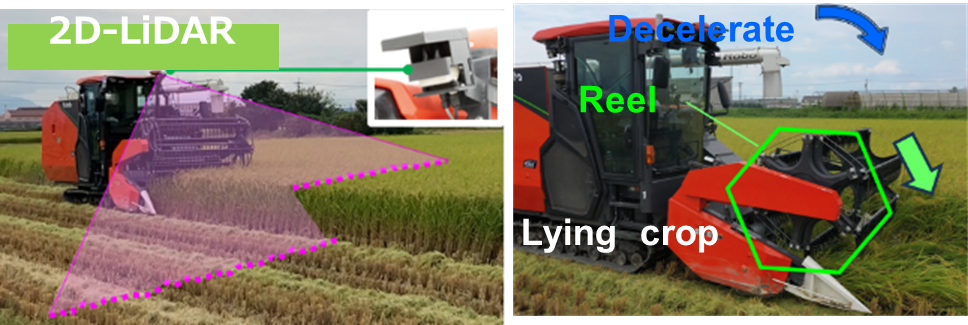
Figure 4 Automatic adjustments based on crop height
3.Summary
The unmanned autonomous combine harvester allows for the harvesting of rice and wheat without a human on board, hence addressing labor shortages while improving work efficiency issues that face large-scale farmers. We will continue to contribute to the advancement of robot technology and efforts to promote the widespread adoption of smart agriculture.
Sotaro Hayashi
Member, Kubota Corporation (1-11 Takumicho, Sakai, Osaka 590-0908)
Toshiaki Fujita
Kubota Corporation (same as above)
Osamu Yoshida
Kubota Corporation (same as above)
Junichi Yuasa
Kubota Corporation (same as above)
Shunsuke Edo
Kubota Corporation (same as above)