Commercialization of dry low-NOx hydrogen-fired/mixed-fuel gas turbine
1.Abstract
Kawasaki is conducting research and development towards the realization of a future hydrogen society, including production, refinement, liquefaction, storage, transportation, and use of hydrogen. In particular, regarding utilization, we are working on the development of hydrogen power generation technology using gas turbines and gas engines. Hydrogen power generation can adjust the balance of supply and demand of electricity from variable renewable energy sources such as solar and wind power, which are becoming increasingly popular, and is expected to contribute to carbon neutrality as it does not emit carbon dioxide during combustion. However, hydrogen has a faster combustion speed and higher combustion temperature than natural gas, making it more likely to emit NOx. By applying micromix combustion and a supplemental burner, we have developed a dry hydrogen combustor that can use hydrogen at any volume ratio between 50% and 100% while keeping NOx emissions below the levels regulated in the Air Pollution Control Act.
2.Contents of technology
The micromix combustor uses a hydrogen dry low NOx combustion system with numerous small hydrogen flames. As shown in Figure 1, hydrogen is injected through tiny hydrogen small injection holes and rapidly mixed with intersecting air jets to form small hydrogen flames with excellent combustion stability and short reaction time to suppress NOx generation.
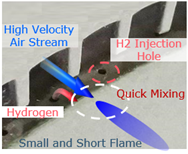
Figure 1 Schematic of micromix hydrogen combustion flame
To extend the fuel flexibility, a supplemental burner system, which is shown in Figure 1 was applied to the micromix combustor. By applying the supplemental burner, some of the combustion air is bypassed under low load conditions, and the micromix combustion region can be kept in more fuel-rich condition. This makes it possible to expand the flame holding range even when the natural gas ratio is high or gas turbine load is low.
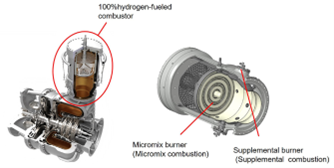
Figure 2 Schematic of hydrogen dry low NOx micromix combustor and gas turbine
Figure 3 shows the operating results when using 100% hydrogen fuel. By adjusting the fuel supply ratio between the micromix burner and the supplementary burner, NOx emissions was kept below the target level, and stable low-NOx operation was achieved.
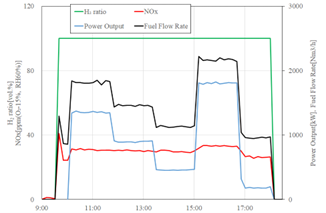
Figure 3 Emission result of micromix combustor
3.Conclusion
For future hydrogen energy, Kawasaki is promoting the creation of a hydrogen supply chain. Gas turbines, which “use” hydrogen, are one of the important products that contribute to decarbonization, and we intend to continue to develop further gas turbine combustion technology using hydrogen fuel.
Atsushi Horikawa
Member,Kawasaki Heavy Industries, Ltd.
Shigeki Aoki
Kawasaki Heavy Industries, Ltd.
Yuki Ishimura
Kawasaki Heavy Industries, Ltd.
Kunio Okada
Kawasaki Heavy Industries, Ltd.
Masato Yamaguchi
Kawasaki Heavy Industries, Ltd.